The technician will inspect your property for breeding sites and infestation risks. Share any concerns you’ve noticed. They will discuss urgent issues, provide solutions, and send a full report by email or post.
Treatment
Depending on what the inspection reveals, treatment may be advised (spot treat) on the day, a broader treatment across your home or property may be recommended. We use a variety of techniques and pesticides depending on the pest and the level of infestation.
Follow Up
On completion we will supply a comprehensive inspection report which will include recommendations, preventative treatment options and pricing if required.
Eco Friendly
We use safe, eco-conscious methods to protect your home, family, and the environment. Sustainable solutions for a healthier, pest-free space.
We use eco-friendly products and modern techniques that target unwanted pests while protecting native wildlife, pets, and your family’s health. Our treatments minimise the use of harsh chemicals, focusing instead on sustainable solutions that deliver long-lasting results.
Pests
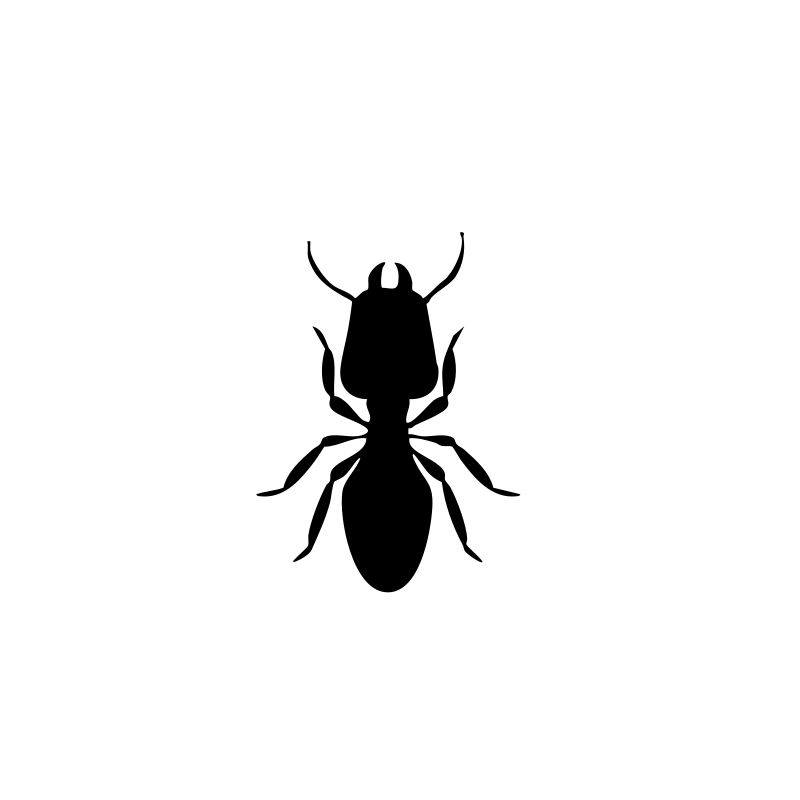
Termites, also known as White Ants, are the most common and most destructive pest that we treat. Termites are social insects that live in a colony like ants or bees. Their sole diet is cellulose so they seek wood, cardboard and paper. The only member of a termite colony which can actually eat timber is the worker caste. They are present throughout Australasia.
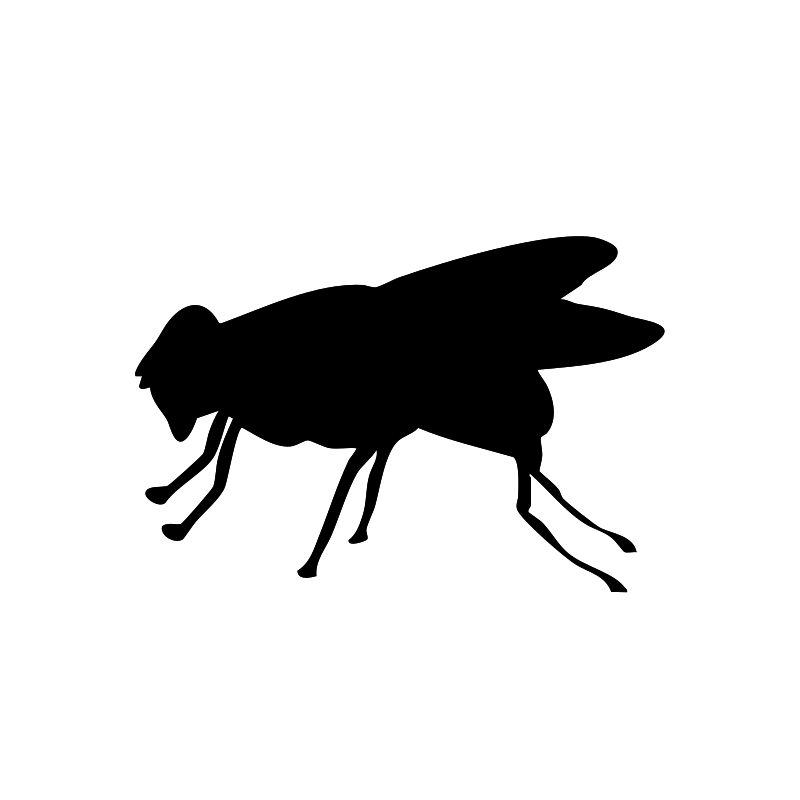
The fly is an omnivorous animal that will eat almost anything from nectar of plants, to sap and even animal blood. Flies are able to prey on such things as it uncoils it’s long, straw-like tongue which then sucks the liquid into the fly’s body. The baby flies or maggots, are known to feed primarily on decomposing matter such as excrement and flesh.
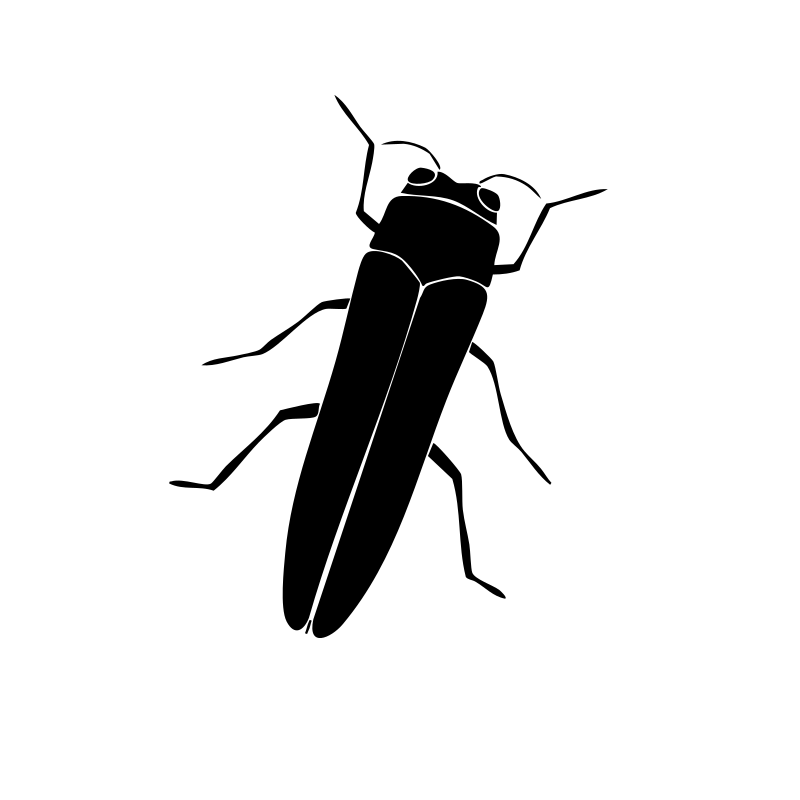
Common house borers are economically significant pests in Australia. As homes age, damage to timber continues to accumulate, and repeated infestations progressively weaken structural wood. The larvae tunnel through the timber, creating holes and intricate galleries that allow moisture to enter, promoting fungal growth and accelerating wood rot.
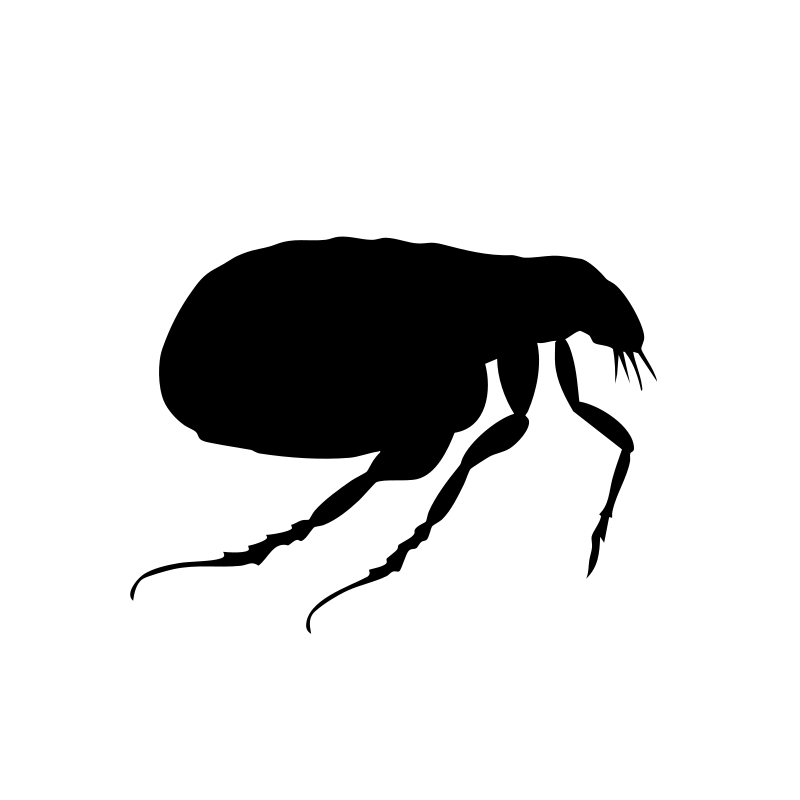
Fleas are a type of wingless parasites. They feed off the blood of humans and animals such as dogs and cats. Fleas are known to transmit tapeworm larvae and, uncommonly, the disease murine typhus. Measuring 2-8 mm in length, the adults are entirely covered with a series of bristles and combs that assists them in clinging to the host.
Both bees and wasps form large colonies that nest in hives, cavities, and other sheltered spaces. They can become a nuisance when they establish themselves in roof voids, wall cavities, chimneys, or nearby tree hollows. We will inspect the site and determine the most appropriate course of action. After treatment, entry points will need to be sealed to help prevent future infestations.
These animals are well adapted to living in very close association with humans, sharing their food and shelter. Through history, rats and mice have been responsible for enormous losses of food and, owing to their ability to transmit diseases to humans by a variety of means, enormous losses of human life.
The first step to successfully treating ants is to have an expert identify the species, where possible seek out the nesting areas and foraging trails. By identifying the species we can determine the best treatment moving forward. Different ant species behave in different ways determined by whether the colony is supported by one queen or multiple queens and this also being a determining factor in regard to successful treatment.
Bed bugs are small, wingless insects found all over the world. They are nocturnal parasites, which means they rest during the day and are active at night. They feed on the blood of humans. Bed bugs prefer to hide in bedding and on mattresses where they have ready access to a source of food.
Cockroaches represent a primitive and highly successful group of insects whose origins extend back at least 300 million years. Most pest cockroaches originated in tropical or subtropical Africa. Their wide distribution and close association with humans, coupled with the high frequency with which they carry human diseases, in and on their bodies, have given them a very high pest status in most parts of the world.